Build Your Digital Empire: Learn, Implement, and Grow Online
Most people do not fail online because they lack ideas.
They fail because they stay stuck between learning and action.
They watch videos. Save reels. Attend webinars. Download guides. Follow business pages. Make plans. Then another idea comes in, and the cycle repeats.
The internet has made business knowledge more accessible than ever. But access is not the same as execution.
Building a digital empire does not mean becoming famous overnight or launching a perfect business in one week.
It means learning useful digital skills, applying them step by step, building real assets, and improving consistently.
That is the difference between consuming content and creating growth.
What Does “Digital Empire” Really Mean?
A digital empire is not just a website or Instagram page.
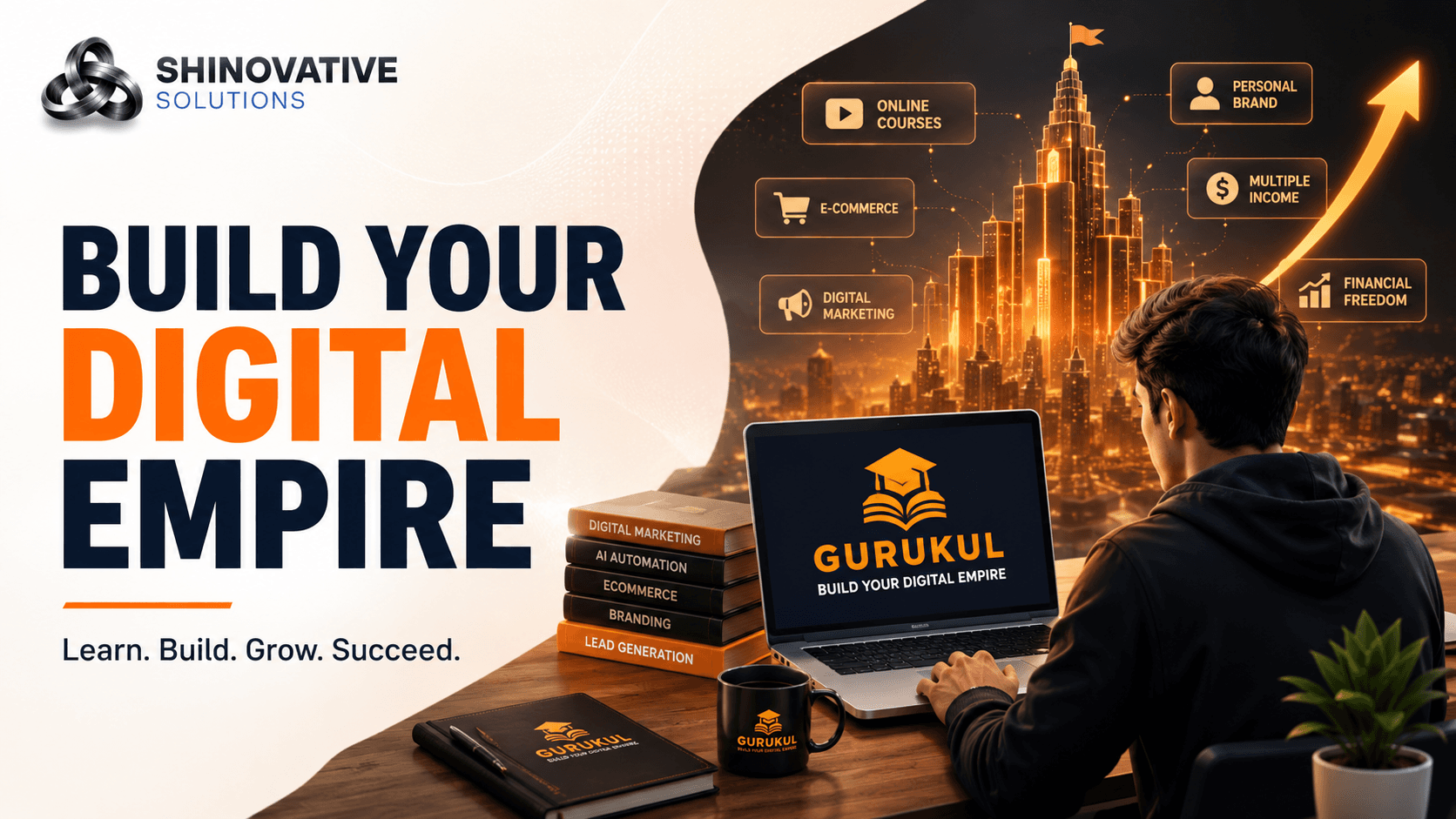
It is a system of online assets that help you create visibility, trust, leads, sales, and long-term growth.
These assets can include:
- A personal brand
- Business website
- E-commerce store
- Digital products
- Social media presence
- Email or WhatsApp list
- Customer community
- Paid ad campaigns
- SEO content
- Automation workflows
- Online courses or services
In simple words:
A digital empire is a business ecosystem that can grow online.
It does not have to be huge in the beginning. It has to be built properly.
The Learn, Implement, Grow Framework
A practical digital growth journey has three stages:
Learn → Implement → Grow
Many people only do the first part. They keep learning.
But real progress happens when learning turns into implementation.
1. Learn: Build the Right Foundation
Learning is important, but it should be focused.
Instead of trying to learn everything at once, start with skills that directly help you build or grow online.
Useful skills include:
- Digital marketing basics
- Website fundamentals
- Social media strategy
- Content creation
- Google Business Profile
- SEO basics
- Paid ads basics
- E-commerce setup
- Sales funnels
- Customer communication
- AI automation
- Analytics and tracking
The goal is not to become an expert in everything immediately.
The goal is to understand how the pieces connect.
Example
A beginner who wants to start an online store should first understand:
- Product selection
- Store setup
- Product page writing
- Payment and delivery flow
- Basic ads
- Social media content
- Customer follow-up
That is more useful than randomly learning advanced marketing terms.
2. Implement: Turn Knowledge Into Real Assets
Implementation is where most people slow down.
They wait for the perfect logo. Perfect website. Perfect product. Perfect course. Perfect confidence.
But digital growth rewards action.
Start by building one real asset.
Examples:
- Create a simple business landing page
- Set up a Google Business Profile
- Publish five useful posts
- Build one product page
- Write one blog
- Launch one small ad test
- Create one lead form
- Build one automation workflow
Each asset teaches you something.
A landing page teaches messaging. A product page teaches customer clarity. An ad teaches audience response. A blog teaches search intent. A sales call teaches objections.
You cannot learn these only by watching videos.
You learn them by doing.
3. Grow: Improve Based on Feedback
Growth begins after implementation.
Once something is live, you can improve it.
Ask:
- Are people visiting?
- Are they clicking?
- Are they asking questions?
- Are they buying?
- Where are they dropping off?
- What message gets responses?
- Which content performs better?
- Which offer creates interest?
Digital growth is not guessing. It is improving based on feedback.
Creative example
Imagine a student launches a small digital service offering social media post designs for local businesses.
At first, nobody responds.
Instead of quitting, they improve:
- Add examples
- Create a simple portfolio
- Message local businesses
- Offer a starter package
- Post before-and-after designs
- Ask for testimonials
- Build a small website
- Run a low-budget ad
That is how a small digital skill becomes a real business asset.
Not overnight. Step by step.
Why Practical Learning Matters
Many courses teach theory. But entrepreneurs need practical clarity.
They need to know:
- What to do first
- What tools to use
- How to create offers
- How to write simple content
- How to attract customers
- How to build trust
- How to follow up
- How to measure results
This is where practical training programs like Shineovative Gurukul can create value.
The purpose should not be only education. It should be execution.
A learner should leave with something built, not just something understood.
The Digital Empire Starter Map
Here is a simple path for beginners:
Step 1: Choose your direction
Pick one:
- Service business
- E-commerce store
- Digital product
- Personal brand
- Local business growth
- Freelance skill
- Online training
Step 2: Define your audience
Who are you helping?
Be specific.
Not “everyone.” Choose a clear customer group.
Step 3: Create one offer
An offer should explain:
- What you provide
- Who it helps
- What problem it solves
- What result it supports
- How someone can start
Step 4: Build one online asset
Start with:
- Landing page
- Instagram page
- Google Business Profile
- Product page
- Portfolio page
- Lead form
Step 5: Create content consistently
Share:
- Lessons
- Proof
- Process
- Mistakes
- Tips
- Offers
- Customer stories
Step 6: Get feedback
Talk to people. Ask questions. Watch behavior.
Step 7: Improve and repeat
Digital growth is built through cycles.
Launch. Learn. Improve. Repeat.
Common Mistakes Beginners Make
1. Learning too much without building anything
Knowledge only becomes useful when applied.
2. Waiting for perfection
Your first version will not be perfect. It needs to exist first.
3. Copying others blindly
Your audience, skill level, offer, and market may be different.
4. Ignoring sales and communication
A business does not grow only from design or content. It grows through trust and conversations.
5. Giving up too early
Most people stop before they collect enough feedback to improve.
What You Should Learn First
If you are serious about building online, start with these fundamentals:
- How to identify a customer problem
- How to create a simple offer
- How to build a landing page
- How to write basic sales copy
- How to create useful content
- How to use social media with purpose
- How SEO and ads work
- How to follow up with leads
- How to track basic numbers
- How to improve based on results
These skills are practical. They help you create, market, and grow.
Final Takeaway
Building your digital empire is not about chasing every trend.
It is about learning the right skills, implementing them consistently, and improving based on real feedback.
Start small. Build one asset. Create one offer. Talk to one audience. Publish useful content. Track results. Improve every week.
That is how online growth becomes real.
The people who win are not always the ones who know the most.
They are the ones who learn, implement, and keep going.
FAQs
What does build your digital empire mean?
It means building online assets such as a website, brand, content, audience, offers, products, services, and automation systems that help you grow a business digitally.
Who can build a digital business?
Students, entrepreneurs, freelancers, small business owners, creators, and professionals can all build digital businesses with the right skills and consistent implementation.
What should I learn first to build online?
Start with customer problems, offer creation, website basics, content strategy, digital marketing, lead generation, and follow-up.
Do I need a big budget to start?
No. Many digital businesses can start small with a focused offer, simple online presence, useful content, and consistent outreach.
How does Shineovative Gurukul help?
Shineovative Gurukul can help learners move from theory to practical execution by focusing on digital business skills, implementation, and online growth fundamentals.
Internal Link Suggestions
Link this blog to:
- Shineovative Gurukul page
- Digital Empire store page
- Digital Marketing Strategy blog
- What Is Digital Marketing blog
- E-Commerce Growth Blueprint blog
- AI Automation blog
- Contact page
Suggested anchor text:
- Shineovative Gurukul
- Digital Empire guide
- digital marketing strategy
- what is digital marketing
- e-commerce growth blueprint
- AI automation for business
- start your digital journey
Soft CTA
If you want to stop only consuming business content and start building real digital assets, Shineovative Gurukul is designed around practical learning and implementation.
Learn the skills, apply them step by step, and start building your digital empire with more clarity and confidence.