E-Commerce SEO: How Online Stores Can Rank and Sell More
Imagine you own an online store that sells beautiful products.
Your product photos are good. Your website looks clean. Your checkout works. But there is one problem: customers are not finding your store unless you run ads or post constantly on social media.
That is where many e-commerce brands get stuck.
They have products, but no search visibility.
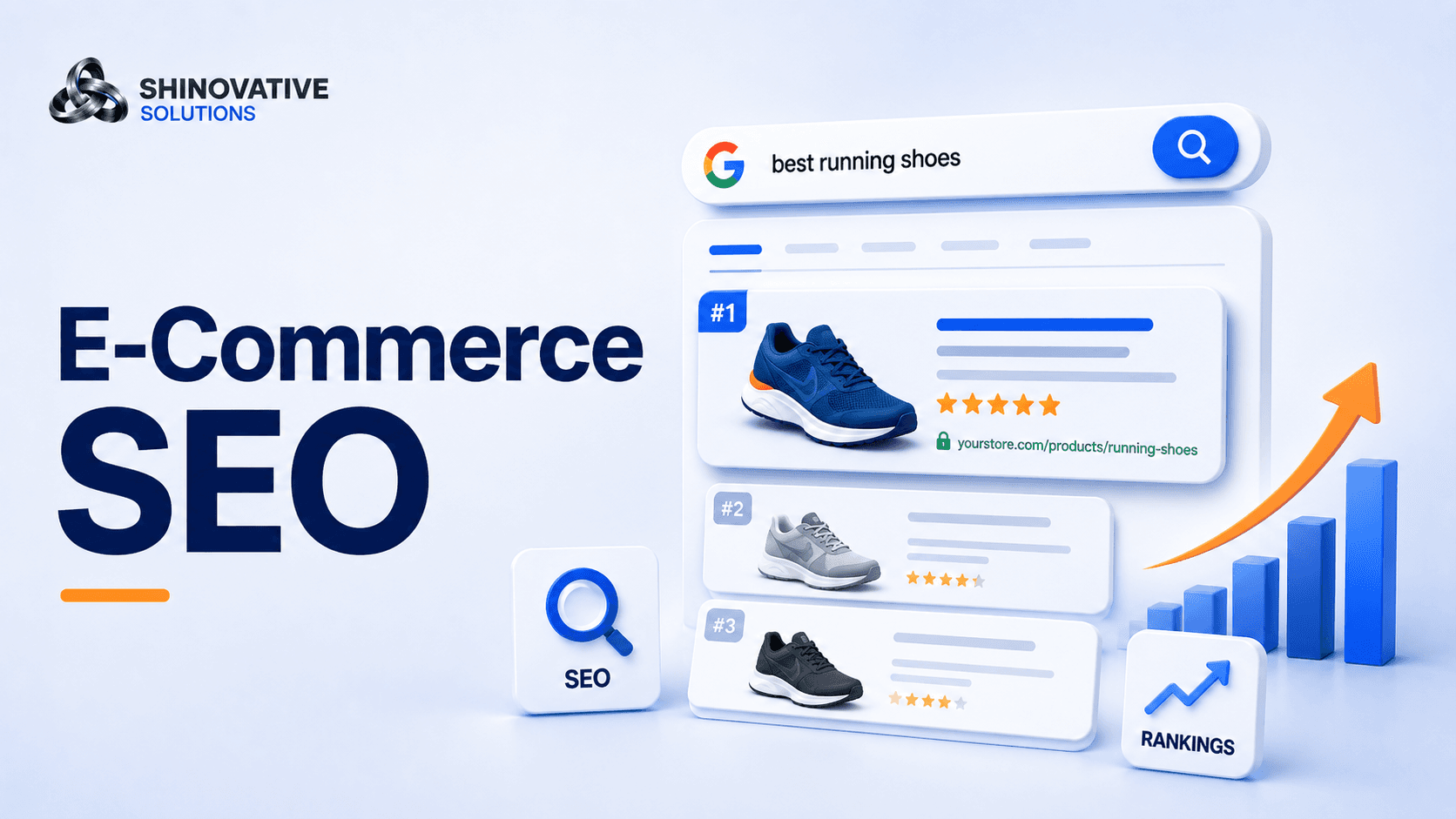
E-commerce SEO helps solve this problem. It improves your online store so customers can find your products on Google when they search for them.
If someone searches “handmade candles online,” “organic skincare products,” “men’s leather wallet,” “custom gift boxes,” or “buy home decor online,” your store should have a chance to appear.
The goal of e-commerce SEO is simple:
Help the right customers find your products without depending only on paid ads.
What Is E-Commerce SEO?
E-commerce SEO is the process of optimizing an online store so its product pages, category pages, and content can rank better on search engines.
It includes:
- Product titles
- Product descriptions
- Category pages
- URLs
- Image alt text
- Internal links
- Site speed
- Mobile experience
- Reviews
- FAQs
- Structured product information
- Blog content
E-commerce SEO is not just about traffic. It is about attracting people who are already searching for products like yours.
That makes it valuable for long-term growth.
Why E-Commerce SEO Matters
Paid ads can bring quick traffic, but every click costs money.
SEO works differently. It builds long-term visibility.
If your product or category pages rank well, they can continue bringing visitors without paying for every single click.
That does not mean SEO is free or instant. It takes effort, structure, and consistency. But it can reduce dependency on ads over time.
For online stores, SEO helps with:
- More product visibility
- Better organic traffic
- Lower long-term acquisition cost
- Stronger brand trust
- More informed customers
- Better product discovery
A store that combines SEO with ads, social media, and retention campaigns has a stronger growth foundation.
The E-Commerce SEO Structure
A good online store usually needs three SEO layers:
Category Pages → Product Pages → Support Content
Let’s break that down.
1. Category Pages: Rank for Broader Searches
Category pages are important because they target broader product searches.
Examples:
- Handmade candles
- Organic skincare
- Formal shoes for men
- Home decor items
- Custom gift boxes
- Fitness accessories
Many store owners ignore category pages and focus only on products. That is a mistake.
A category page should not be empty or only show products. It should include helpful content.
A strong category page can include:
- Clear category title
- Short description
- Product filters
- Popular products
- Buying guide section
- FAQs
- Internal links to related categories
- Customer reviews or trust signals
Example
Instead of a category page that only says:
Skincare Products
Use something more helpful:
Explore skincare products designed for daily hydration, glow, and skin nourishment. Choose from cleansers, serums, moisturizers, and combo packs based on your skin goals.
This gives both customers and search engines more context.
2. Product Pages: Help Customers Decide
A product page should do more than display a product.
It should answer the customer’s questions before they hesitate.
A good product page includes:
- Clear product title
- Benefit-focused description
- High-quality images
- Price
- Variants
- Size or quantity details
- Ingredients or materials
- Usage instructions
- Delivery details
- Return policy
- Reviews
- FAQs
- Related products
- Clear add-to-cart button
Example
Weak product title:
Glow Combo
Better product title:
Daily Glow Skincare Combo for Hydration and Brightness
The better title explains what the product is and why someone may want it.
Product description tip
Do not only describe what the product contains. Explain how it helps.
Weak description:
This combo includes cleanser, serum, and moisturizer.
Better description:
This daily skincare combo is designed for customers who want a simple routine for cleansing, hydration, and a fresh glow without using too many separate products.
The second version feels more useful.
3. Support Content: Answer Questions Before Customers Buy
Blogs and guides can support e-commerce SEO by answering customer questions.
Examples:
For skincare:
- How to build a simple skincare routine
- Serum vs moisturizer: what comes first?
- How to choose skincare products for dry skin
For candles:
- How to choose the right candle fragrance
- Soy wax vs paraffin candles
- Best candle gift ideas for housewarming
For fashion:
- How to style formal shoes
- How to choose the right wallet
- Outfit ideas for office wear
Support content helps attract informational searches and guide customers toward products.
A blog should not just exist for SEO. It should help customers make better buying decisions.
Product SEO Checklist
Before publishing a product page, check:
- Product title includes clear product type
- Description explains benefits
- Important keywords are used naturally
- Images have descriptive file names
- Images have alt text
- Price and variants are clear
- Delivery information is visible
- Return policy is easy to find
- Reviews are included
- FAQs answer buying doubts
- Related products are linked
- CTA button is visible on mobile
Think of every product page like a salesperson.
If the page does not answer basic questions, the customer may leave.
Image SEO for Online Stores
Images are extremely important for e-commerce.
But large image files can slow the website, and poorly named images do not help SEO.
Use clean file names like:
organic-skincare-combo.webphandmade-vanilla-candle.webpmens-brown-leather-wallet.webp
Avoid:
IMG_4928.jpgproduct-final-new-2.pngimage1.jpg
Also add alt text that describes the product clearly.
Example:
Daily glow skincare combo with cleanser, serum, and moisturizer
Good image SEO improves accessibility, supports search understanding, and keeps your store organized.
Internal Linking for E-Commerce SEO
Internal links help customers and search engines move through your store.
Examples:
- Link blog posts to relevant products
- Link product pages to related products
- Link category pages to subcategories
- Link bestsellers from homepage
- Link FAQs to product pages
- Link buying guides to product collections
Example
A blog about “How to choose a candle fragrance” can link to:
- Scented candles category
- Vanilla candle product
- Gift candle set
- Candle care guide
This helps customers continue their journey.
Do not let blog readers reach a dead end.
Common E-Commerce SEO Mistakes
1. Copying manufacturer descriptions
Duplicate product descriptions make your store less unique. Write your own descriptions where possible.
2. Ignoring category page content
Category pages can rank for valuable search terms. Do not leave them empty.
3. Uploading heavy images
Slow product pages can reduce conversions and hurt user experience.
4. Using vague product names
Customers and search engines both need clear product titles.
5. Not adding FAQs
FAQs help answer doubts and can improve page usefulness.
Quick 30-Day E-Commerce SEO Plan
Week 1: Fix product basics
- Improve top product titles
- Rewrite weak descriptions
- Add alt text to images
- Compress product images
- Check mobile product pages
Week 2: Improve categories
- Add category descriptions
- Add FAQs to major categories
- Link related categories
- Feature bestsellers
Week 3: Add support content
- Write one buying guide
- Write one comparison blog
- Add internal links to products
- Add product FAQs
Week 4: Review and optimize
- Check traffic sources
- Review search queries
- Improve low-converting pages
- Add reviews and trust signals
- Update product content based on customer questions
Small improvements across many product pages can create strong long-term impact.
Final Takeaway
E-commerce SEO is not just about ranking.
It is about helping customers find the right product, understand it clearly, trust your store, and complete the purchase.
Your category pages bring structure. Your product pages drive decisions. Your blogs answer questions. Your internal links guide the journey. Your images and speed improve the experience.
When these pieces work together, your store becomes easier to discover and easier to buy from.
That is how SEO supports real e-commerce growth.
FAQs
What is e-commerce SEO?
E-commerce SEO is the process of optimizing an online store so product pages, category pages, and content can rank better on search engines and attract more potential buyers.
How is e-commerce SEO different from normal SEO?
E-commerce SEO focuses heavily on product pages, category pages, product descriptions, image optimization, reviews, filters, checkout experience, and buying-intent keywords.
How long does e-commerce SEO take?
SEO takes time. Some improvements may show results in weeks, but stronger growth usually requires consistent work over several months.
Do product descriptions matter for SEO?
Yes. Clear, original, benefit-focused product descriptions help customers understand the product and help search engines understand the page.
Should online stores write blogs?
Yes, if the blogs answer real customer questions and link naturally to products or categories. Blogs can support product discovery and trust.
Internal Link Suggestions
Link this blog to:
- E-Commerce Solutions page
- E-Commerce Growth Blueprint blog
- Website Development Services page
- Google Ads Services page
- Meta Ads Services page
- AI Automation Services page
- Contact page
Suggested anchor text:
- e-commerce solutions
- e-commerce growth blueprint
- e-commerce website development
- Google Ads for online stores
- Meta Ads for e-commerce
- e-commerce automation
- online store SEO audit
Soft CTA
If your online store looks good but does not get enough organic traffic or product sales, the issue may be your product pages, category structure, image SEO, site speed, or content strategy.
Shineovative Solutions can review your e-commerce store and identify what needs to improve so your products become easier to find, understand, and buy.