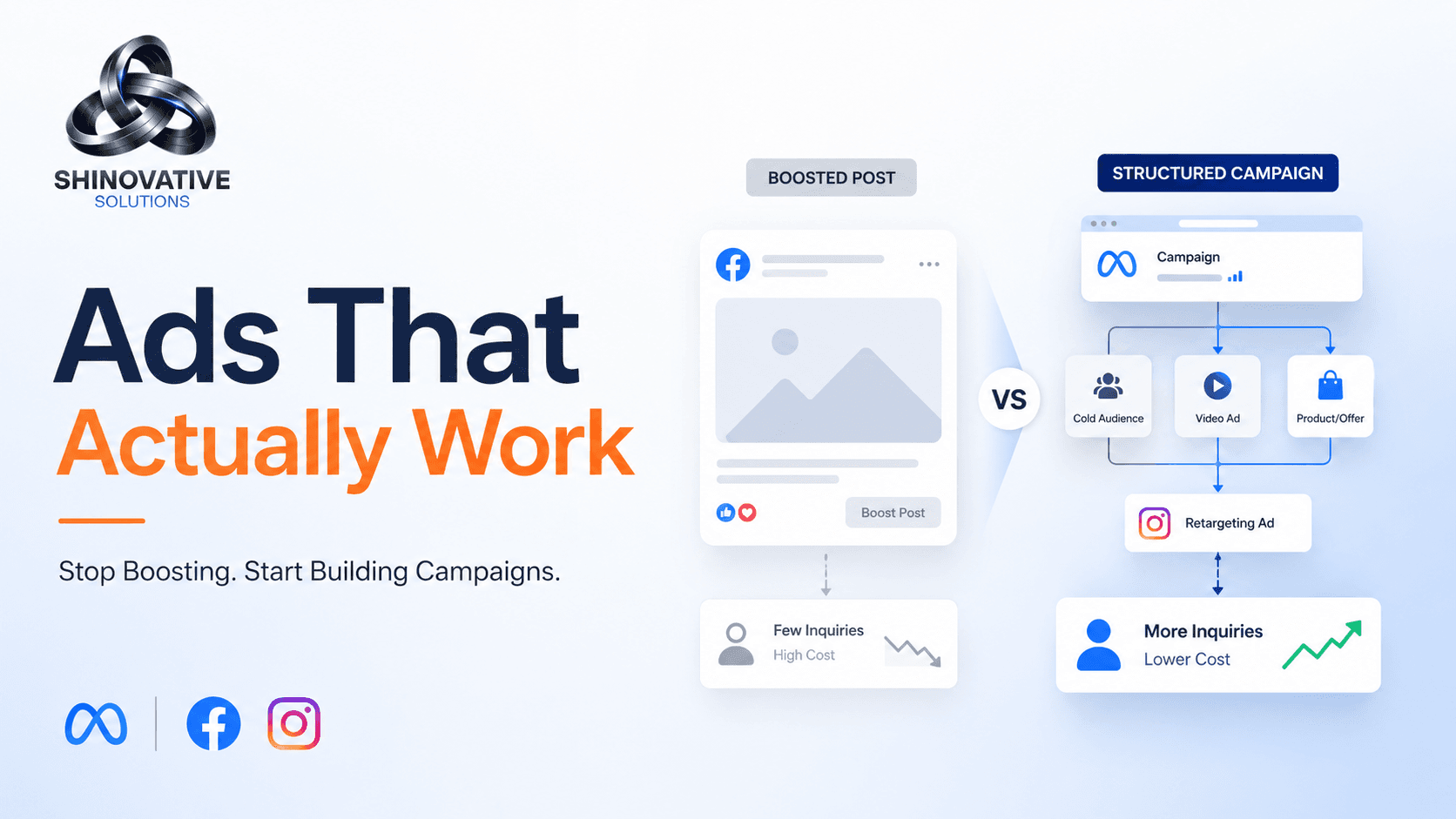
Meta Ads Strategy That Actually Works: Stop Boosting Random Posts and Start Building Campaigns
A business owner posts a nice creative on Instagram.
It gets a few likes. Maybe a few comments. The owner feels good and clicks Boost Post.
A few days later, the post reaches more people. The numbers look active. But the phone does not ring. No serious inquiries come in. No sales happen.
Then the business owner says:
“Meta Ads do not work.”
But most of the time, Meta Ads did not fail. The strategy failed.
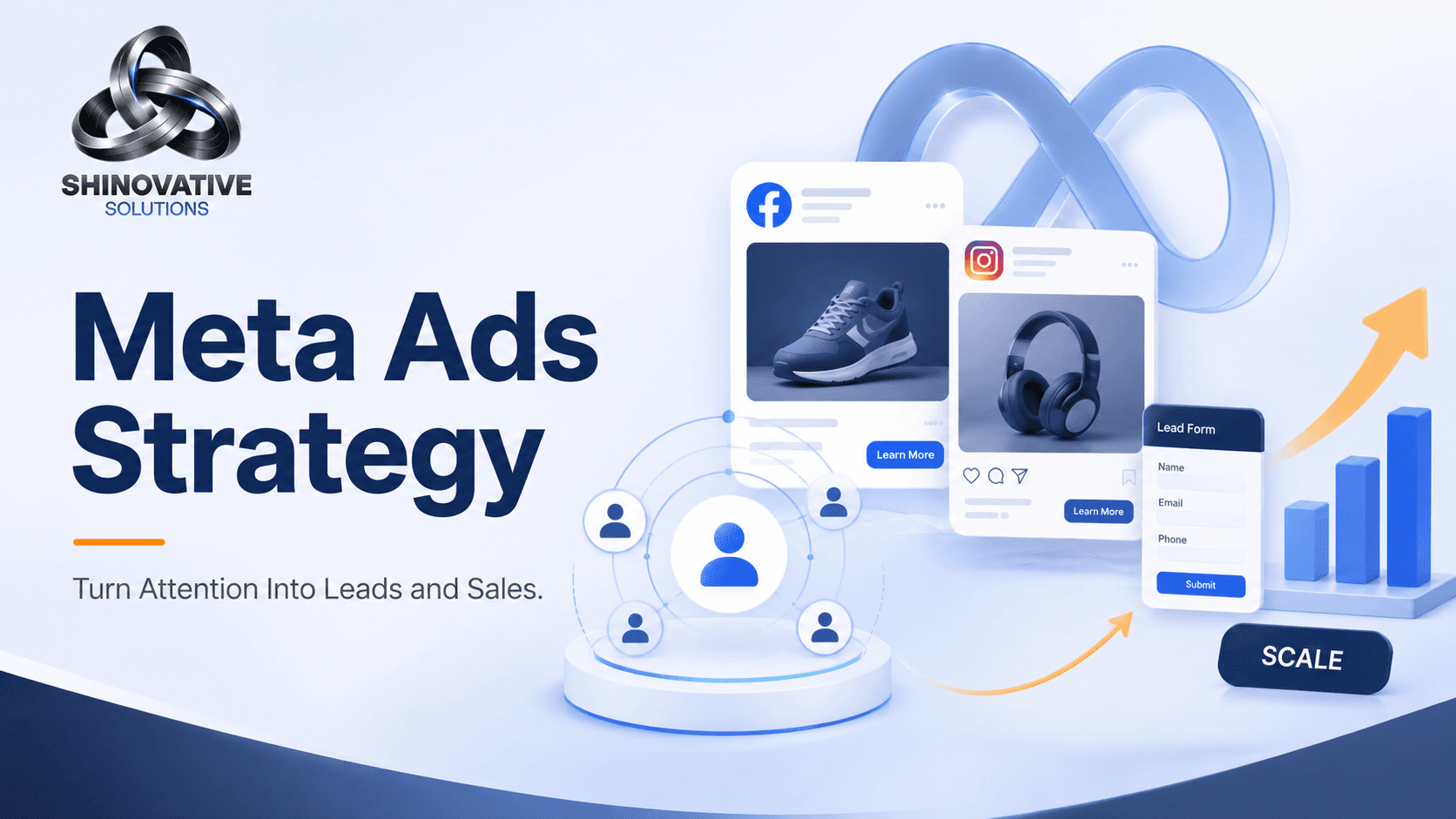
Boosting a random post is not the same as building an advertising campaign. A real Meta Ads strategy connects the audience, creative, offer, landing path, and follow-up system.
That is when Facebook and Instagram ads start becoming useful for business growth.
First, Understand the Platform
People behave differently on Meta platforms than they do on Google.
On Google, people search with intent. They type what they need.
On Instagram or Facebook, people are usually scrolling. They are not always looking for your service at that moment.
That means your ad has to do two things quickly:
- Stop the scroll
- Make the next step feel easy
You cannot expect people to work hard to understand your offer.
If the ad is confusing, they scroll. If the offer is weak, they ignore it. If the form is too long, they quit. If follow-up is slow, they forget.
A working Meta Ads strategy respects how people actually behave.
The “Scroll to Sale” Framework
A simple Meta Ads framework is:
Hook → Problem → Offer → Action → Follow-Up
This is easier to remember than complicated ad theory.
Hook
What makes someone stop scrolling?
Problem
What pain point are you speaking to?
Offer
Why should they respond now?
Action
What should they do next?
Follow-Up
How quickly and clearly do you respond?
If your campaign is weak, one of these five parts is usually broken.
1. Start With the Customer Problem
Many ads start with the business:
We are the best digital agency.
But customers care about their own problem first.
A better ad starts with what the customer is experiencing.
Examples:
For local SEO:
Not showing up when customers search near you?
For Google Ads:
Getting clicks but not enough leads?
For websites:
Your website looks good, but is it bringing inquiries?
For e-commerce:
People visit your store but leave without buying?
These lines work because they sound like the customer’s real frustration.
When someone feels, “That is exactly my problem,” they are more likely to pay attention.
2. Use Creative That Explains Quickly
A good Meta ad does not need to be loud. It needs to be clear.
The creative should instantly show what the ad is about.
For example:
- Local SEO ad: show search results, map pins, top ranking cards
- Google Ads ad: show search ad, clicks, leads, conversion path
- Website ad: show desktop and mobile website mockups
- E-commerce ad: show product page, cart, checkout, delivery
- AI automation ad: show workflow steps, chat, CRM, follow-up
Avoid overcrowding the design with too many icons, paragraphs, or badges.
The best ad creative should be understood in two seconds.
If someone has to zoom in, read too much, or guess the meaning, the design is doing too much.
3. Build Offers That Reduce Friction
A common mistake is running ads that only say:
Contact us today.
That is too vague.
People need a reason to take action.
A good Meta Ads offer reduces friction. It makes the next step feel low-risk and useful.
Examples:
- Free Google Business Profile check
- Free website review
- Free ad account audit
- Free e-commerce conversion check
- Book a strategy call
- Get a campaign plan
- Request a quote
- Download a checklist
For Shineovative, an offer like this works better than a generic “Contact us”:
Get a free digital growth audit and discover what is stopping your business from getting more leads online.
It gives the user a benefit before asking for commitment.
4. Choose the Right Campaign Objective
Meta gives different campaign objectives. The objective tells Meta what kind of result to optimize for.
Common objectives include:
- Awareness
- Traffic
- Engagement
- Leads
- Sales
If you want inquiries, choose a lead-focused objective. If you want purchases, choose sales. If you only want visibility, awareness may make sense.
The mistake is choosing an objective that does not match the business goal.
For example, if you want leads but choose engagement, Meta may find people who like and comment, not people who inquire.
Likes are nice. Leads pay bills.
5. Do Not Depend on One Ad
One ad is not a campaign. It is a test.
A better approach is to test multiple angles.
For example, for a website development campaign, test:
Problem angle
Your website is not bringing enough inquiries.
Trust angle
Build a professional website that makes customers take you seriously.
Conversion angle
Turn website visitors into calls, forms, and WhatsApp leads.
Speed angle
Launch a clean business website without months of delay.
Each angle speaks to a different motivation.
Once you find which message works, you can create more variations around it.
6. Retarget People Who Already Showed Interest
Not everyone converts the first time they see your ad.
Some people visit the website and leave. Some open the form but do not submit. Some engage with your Instagram page but do not message. Some watch your video but do not click.
Retargeting helps you reach these warmer audiences again.
Examples of retargeting audiences:
- Website visitors
- Instagram engagers
- Facebook page engagers
- Video viewers
- Lead form openers
- Cart abandoners
- Past customers
Retargeting works because these people already know something about your brand.
A retargeting ad can say:
Still thinking about improving your local visibility? Get a free audit and see what your business is missing.
This feels more relevant than showing the same cold ad again.
7. Follow Up Before the Lead Goes Cold
Meta leads can cool down very fast.
Someone may fill a lead form casually while scrolling. If your team calls after two days, they may not remember why they submitted it.
A working Meta Ads system needs fast follow-up.
Prepare:
- Instant WhatsApp message
- Email confirmation
- Lead qualification questions
- Call script
- CRM tracking
- Reminder follow-up
Example follow-up
Hi, thanks for requesting a digital growth audit. Can you share your website or business profile link? We’ll review it and suggest the first few areas to improve.
This is better than:
Hello, how can we help you?
The first message continues the promise from the ad.
Quick Meta Ads Checklist
Before launching your next campaign, check:
- The customer problem is clear
- Creative is simple and mobile-friendly
- Offer gives a real reason to respond
- Campaign objective matches the goal
- Multiple ad angles are being tested
- Landing page or lead form matches the ad
- Retargeting audience is planned
- Follow-up message is ready
- Leads are tracked inside a sheet or CRM
- Success is measured by lead quality, not only clicks
Creative Example: The Gym That Fixed Its Ads
A local gym was running ads that said:
Join our gym today.
The ad showed equipment and a discount. It got some likes but few inquiries.
Then the message changed to:
Struggling to stay consistent with workouts? Join guided group sessions near you.
The creative showed a simple weekly schedule, trainer support, and real people working out.
The offer changed to:
Book a free trial session.
The result was stronger because the ad moved from “we have a gym” to “we solve your consistency problem.”
That is the heart of good Meta Ads.
Sell the outcome, not just the service.
Common Meta Ads Mistakes
1. Boosting posts without a campaign plan
Boosting can increase reach, but it does not automatically create qualified leads.
2. Making the creative too crowded
If the message is not clear in two seconds, people scroll past.
3. Sending everyone to the homepage
A focused landing page or lead form usually works better.
4. Ignoring retargeting
Warm audiences often convert better than completely cold audiences.
5. Responding too slowly
Fast follow-up can make a big difference in lead quality and conversion.
Final Takeaway
Meta Ads work when they are treated as a complete system.
You need a strong hook, clear customer problem, simple creative, useful offer, correct campaign objective, retargeting plan, and fast follow-up.
Do not just boost random posts and hope for sales.
Build campaigns that guide people from attention to action.
That is how Facebook and Instagram ads become more than visibility. They become a real growth channel.
FAQs
What is a Meta Ads strategy?
A Meta Ads strategy is a plan for using Facebook, Instagram, and other Meta placements to reach the right audience, test creatives, generate leads, retarget users, and improve campaign results.
Is boosting posts the same as running Meta Ads?
No. Boosting posts is a simple promotion option. A proper Meta Ads campaign gives more control over objectives, targeting, creatives, placements, tracking, and optimization.
What type of Meta Ads work best?
Ads with clear hooks, simple visuals, strong offers, and relevant landing paths usually work better than generic promotional posts.
How quickly should I follow up with Meta leads?
As quickly as possible. Meta leads can lose interest fast, so instant or same-day follow-up is ideal.
Should small businesses use Meta Ads?
Yes, but only with a clear strategy. Small businesses should focus on strong offers, simple creatives, local targeting, retargeting, and lead quality.
Internal Link Suggestions
Link this blog to:
- Meta Ads Services page
- Social Media Marketing Guide blog
- Social Media Management blog
- Google Ads Guide blog
- AI Automation Services page
- Contact page
Suggested anchor text:
- Meta Ads services
- Facebook and Instagram ads
- social media marketing
- Google Ads guide
- lead follow-up automation
- digital growth audit
Soft CTA
If your Facebook or Instagram ads are getting attention but not enough serious leads, the issue may be in the message, creative, offer, or follow-up process.
Shineovative Solutions can review your Meta Ads setup and help you build campaigns that are clearer, more strategic, and better connected to real business outcomes.